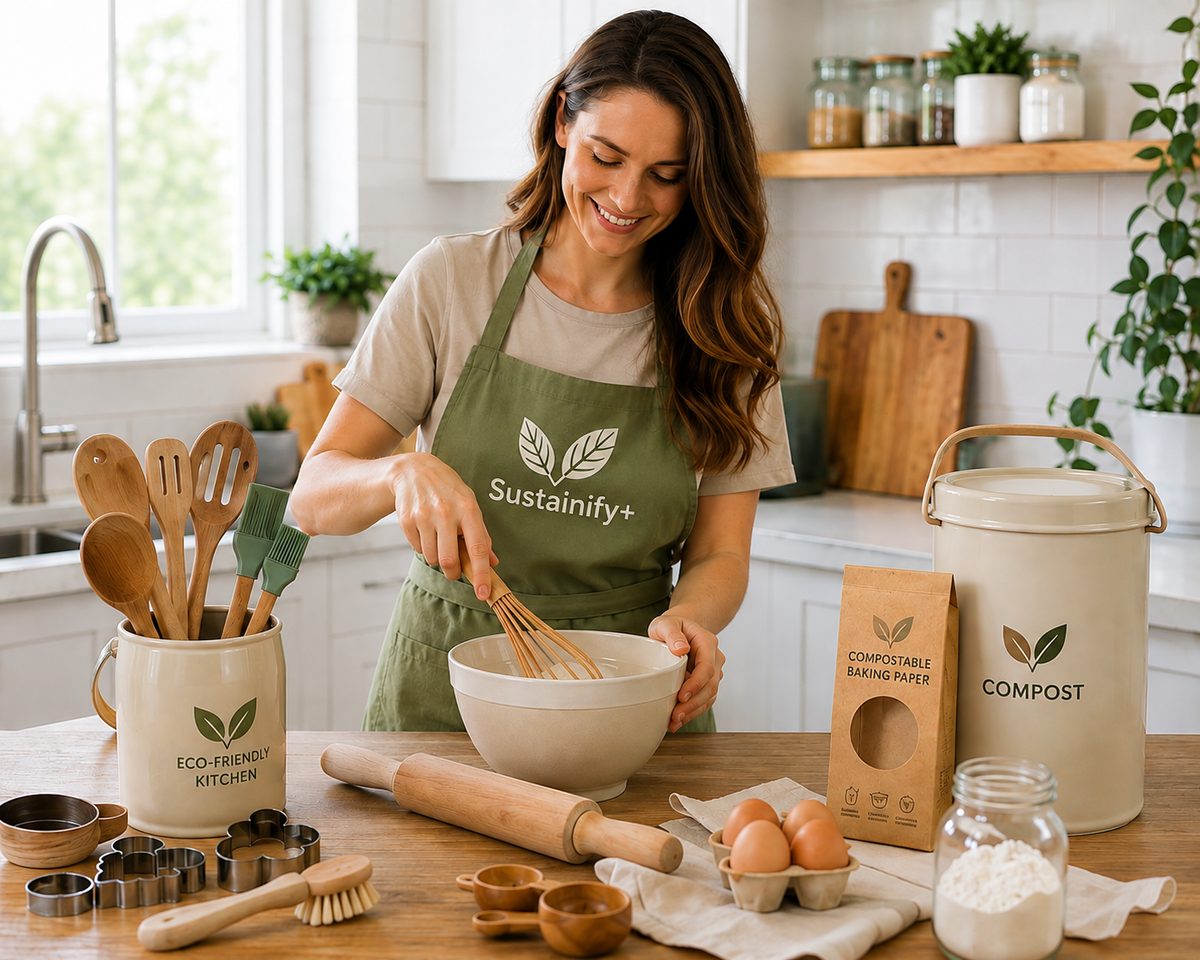
Most kitchen utensils aren't made to last, and a lot of them are made from materials you probably wouldn't choose if you read the label first — plastics that leach when heated, non-stick coatings that break down over time, cheap wood that splinters after a few washes. None of that requires a full kitchen renovation to fix. Here are ten swaps that are safer for your family, genuinely more durable, and cheaper over time than replacing flimsy versions every year.
A quick note before you start: you don't need all ten today. Replace things as they wear out, not all at once — that's both the budget-friendly way and the low-waste way.
1Bamboo cooking utensil set
A good spoon, spatula, and slotted turner set in bamboo replaces the plastic versions that warp near heat and can shed microplastics into food over time.
Why it's safer: Bamboo doesn't melt or leach at cooking temperatures the way many plastics can, and it won't scratch non-stick pans.
2Stainless steel mixing bowl set
Stainless steel bowls go straight from mixing to fridge to reheating (careful with direct stovetop use), and unlike plastic, they won't absorb smells, stain from tomato sauce, or crack.
Why it's safer: No plastic surface means nothing to leach into acidic or hot foods, and steel doesn't hold onto bacteria in scratches the way worn plastic can.
3Cast iron skillet
A well-seasoned cast iron pan can genuinely outlast a non-stick pan by decades, and it goes from stovetop to oven without a second thought.
Why it's safer: No synthetic non-stick coating to wear down or flake off over years of use — just seasoned oil and iron.
Want the full checklist alongside this?
The free Zero-Waste Kitchen Checklist pairs well with these swaps — five simple sections to work through at your own pace.
Get the Free Checklist4Glass measuring cups
Glass measuring cups don't stain, don't hold onto oil residue the way plastic does, and can go in the microwave to warm up sauces or melt butter.
Why it's safer: Glass is inert — it won't react with acidic ingredients like lemon juice or vinegar the way some plastics can over time.
5Food-grade silicone baking mats
Reusable silicone mats replace box after box of parchment paper and aluminum foil for baking sheets — rinse and reuse for years.
Why it's safer: Food-grade silicone is stable at normal baking temperatures and doesn't require the bleaching process some parchment papers go through.
You don't need all ten today. Replace things as they wear out — that's both the budget-friendly way and the low-waste way.
6Solid wood cutting boards
Wood cutting boards are naturally antimicrobial in a way plastic boards aren't, and unlike plastic, they don't develop deep knife grooves that trap bacteria — wood's tight grain actually closes back up between cuts.
Why it's safer: No microplastic shavings ending up in your food from a knife scraping across plastic — a documented issue with well-worn plastic boards.
7Stainless steel colander
A steel colander handles hot pasta water straight off the stove without warping, unlike thinner plastic versions that soften or crack under heat over time.
Why it's safer: No risk of plastic deforming under high heat and no worry about scratches harboring bacteria long-term.
8Ceramic-coated, PTFE-free frying pan
If cast iron feels like too much of a learning curve right away, a ceramic-coated pan is a gentler bridge — still non-stick, but without the PTFE/PFAS coatings found in traditional non-stick cookware.
Why it's safer: Look specifically for "PTFE-free" and "PFOA-free" labeling — that's the detail that actually matters here, more than the brand name.
9Natural fiber dish brush
A wood-handled brush with plant-fiber bristles replaces the sponges most families throw out every few weeks — the brush head is usually the only part you'll ever need to swap.
Why it's safer: Unlike synthetic sponges, natural fiber brushes dry out fully between uses, which means less bacterial buildup sitting by your sink.
10Glass meal prep containers
Rounding this list out with the same swap from our Zero-Waste Kitchen Checklist — glass containers for leftovers and meal prep go from fridge to microwave to dishwasher without staining or holding onto smells.
Why it's safer: No reheating food in plastic, which sidesteps one of the more common ways people unknowingly ingest microplastics at home.
Where to start on a budget
If you're replacing things gradually rather than all at once, start with whatever touches your food the most — cutting boards, mixing bowls, and your everyday cooking utensils see more daily use than almost anything else in the kitchen, so they're worth prioritizing first.
Start with one small swap this week
The Zero-Waste Kitchen Checklist breaks changes into five simple sections you can work through at your own pace.
Get the Free Checklist