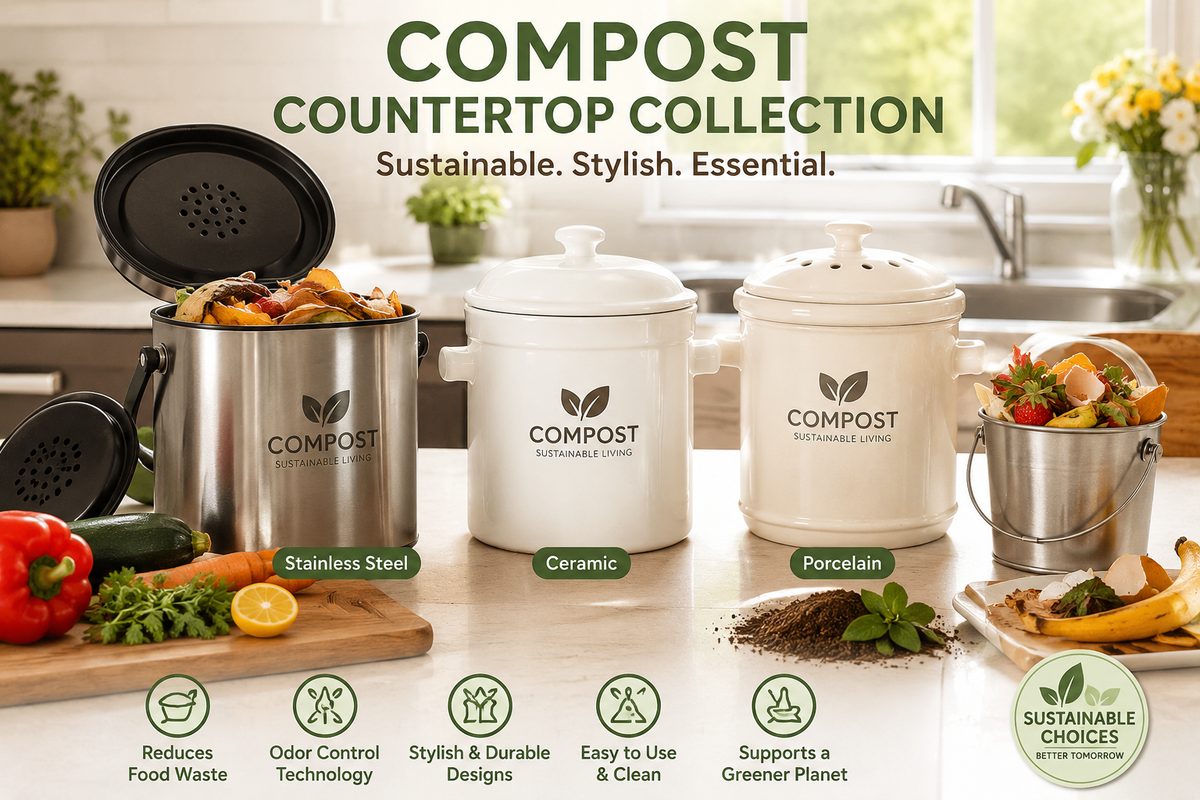
Most people rule out composting because they picture a backyard bin, a shovel, and a lot of turning smelly piles. None of that is required to start. A small countertop bin, a bit of know-how about what actually belongs in it, and a place to drop it off is genuinely the whole system.
What you actually need
Three things, and that's it:
- A small countertop bin with a lid (charcoal-filtered lids help control smell)
- A place for it to go — a curbside pickup program, a local drop-off point, or a backyard pile if you have one
- A rough idea of what belongs in it (below)
Finding a drop-off point
Search "[your city] compost drop-off" or check your city's waste management website — many cities now offer free drop-off at farmers markets or community gardens, even without curbside pickup. Apps like ShareWaste also connect you with neighbors who compost and are happy to take your scraps.
What goes in, what doesn't
Compostable
- Fruit and vegetable scraps
- Coffee grounds and tea bags (check for plastic-free bags)
- Eggshells
- Plain bread and grains
- Paper towels (unbleached, no chemicals)
Skip these
- Meat, dairy, and bones (most home systems can't handle them)
- Oily or greasy food
- Anything labeled "compostable plastic" (usually needs industrial composting)
- Pet waste
You don't need a backyard. You need a bin, a drop-off spot, and a rough idea of what belongs in it.
Keeping it from smelling
This is the part that stops most people before they even start, so it's worth addressing directly. A few habits make a real difference:
- Empty the bin every 2–3 days rather than letting it fill completely
- Keep a folded paper towel or piece of newspaper on top of scraps to reduce fruit flies
- Store the bin in the fridge or freezer if your drop-off schedule is more than a few days out — this genuinely eliminates the smell issue entirely
- Rinse the bin with hot water each time you empty it
Composting is section 3 of 5
The free Zero-Waste Kitchen Checklist covers composting alongside food storage, food waste, cleaning, and shopping — one section at a time.
Get the Free ChecklistGetting kids involved
Composting tends to be the swap kids actually enjoy — there's something satisfying about scraping plates into the bin rather than the trash. Let them be the one who empties it or takes it to the drop-off point; a small job with a clear outcome tends to stick better than a lecture about waste ever will.
Start with one small swap this week
Composting is easiest to add once your food storage habits are already in place — no rush to do it all at once.
Get the Free Checklist